
Walk Sultanahmet by starting at the Hippodrome, continuing to Hagia Sophia and the Blue Mosque area, then spending your main museum time at Topkapı Palace before ending in Gülhane Park.
The Short Answer: Start Open, Then Go Deeper
For a first walk through Sultanahmet, the most coherent order is the Hippodrome, Hagia Sophia, the Blue Mosque area, Topkapı Palace and then Gülhane Park. That sequence starts with an open-air Roman and Byzantine setting, moves into the dense heart of the historic peninsula, gives Topkapı the largest block of attention, and ends in the former palace garden.
This is a sightseeing sequence, not a race between monuments. GoTürkiye describes the historic peninsula, also known as Suriçi, as the capital of both the Eastern Roman and Ottoman empires. It is bounded by the Bosphorus, the Sea of Marmara and the Golden Horn, with ancient city walls on one side. Read that geography into the route: you are crossing the old imperial core of İstanbul, not just moving between sights.
Why This Order Works
The Hippodrome is the right beginning because it gives you space before detail. GoTürkiye describes it as a former Eastern Roman chariot race course, now a park, whose old track is covered by Sultanahmet Meydanı. Starting here lets you understand the district as a civic landscape before the heavier museum and monument rhythm around Hagia Sophia and Topkapı.
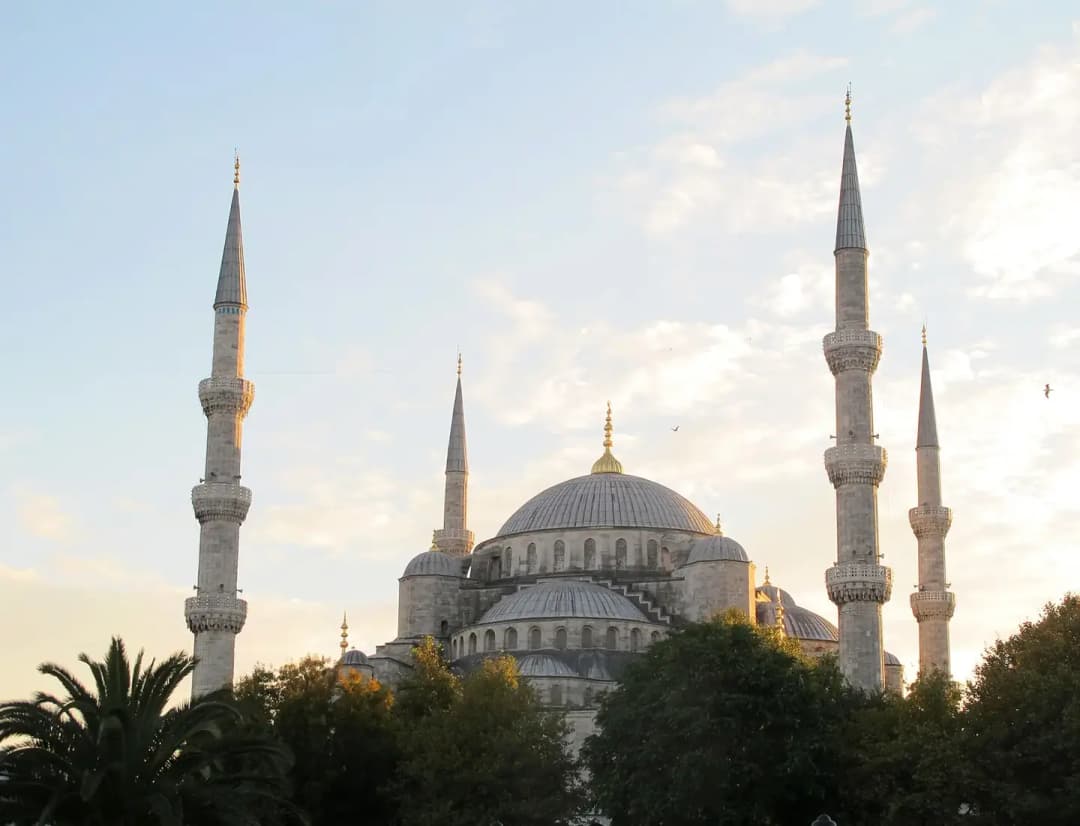
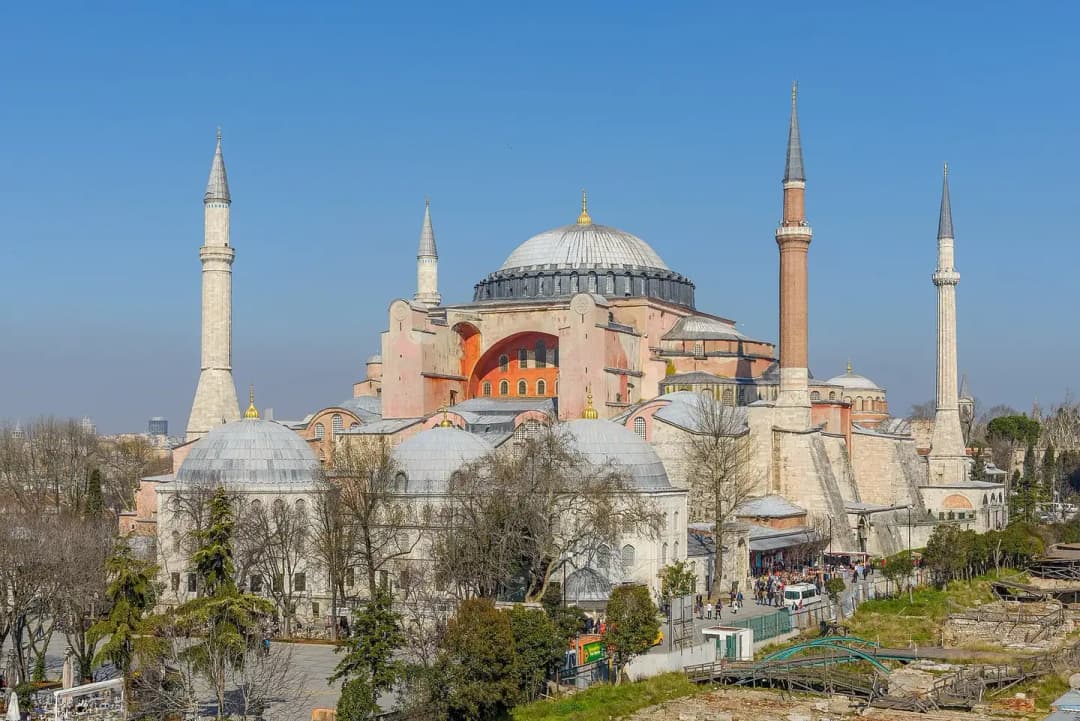
Hagia Sophia belongs near the beginning, but not as an isolated stop. GoTürkiye presents Hagia Sophia as a historical building dating from 537 to the present, and it sits in the same core as the Blue Mosque, which is named for blue ceiling tiles in the İznik tradition and has six minarets. Seeing them together helps you compare scale, orientation and ceremonial space. Current visiting arrangements can change, so check the official current visiting information before you go.
Topkapı Palace should not be squeezed between short stops. GoTürkiye says it was built in the 15th century at the behest of Sultan Mehmet II and was the Ottoman centre of power from the 15th to the 19th century before Dolmabahçe Palace took over. It became a museum in 1923, and the complex includes the Harem, kitchens, treasury and gardens stretching from the First to the Fourth Courtyards.
Gülhane Park works as the finish because it changes the pace without leaving the story. GoTürkiye says the park was once the outer garden of Topkapı Palace and is considered one of the oldest public parks in İstanbul. Its name means House of Roses; more than eighty thousand roses bloom there in spring and summer, and thousands of tulips fill the flower beds. Ending here keeps you within the palace landscape.
The Walking Sequence At A Glance
| Order | Place | Why it fits here |
|---|---|---|
| 1 | Hippodrome | Open-air introduction to Sultanahmet Meydanı and the Eastern Roman layer of the peninsula. |
| 2 | Hagia Sophia and Blue Mosque area | The central monumental pairing of the district; check current visiting information before going inside either site. |
| 3 | Topkapı Palace | The deepest stop, with courtyards, palace collections and the former Ottoman centre of power. |
| 4 | Gülhane Park | A calm finish in the former outer garden of Topkapı Palace, with views from its north-eastern edge. |
1. Begin At The Hippodrome
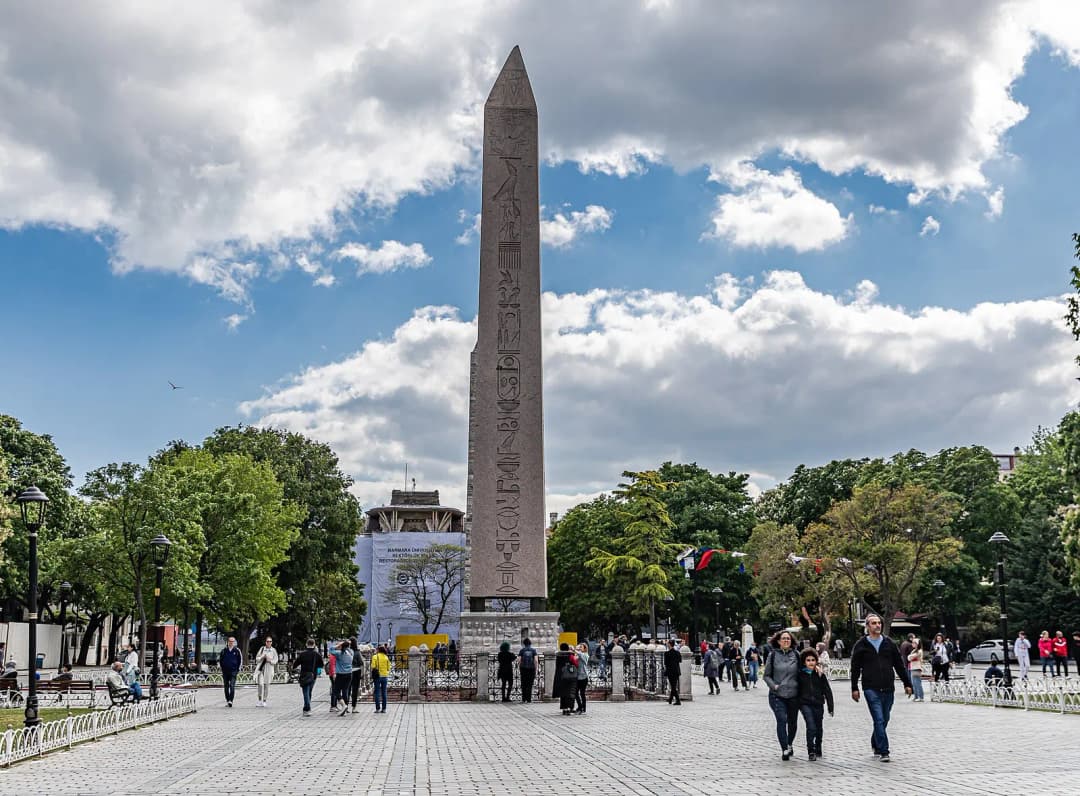
Start at the Hippodrome because it teaches you how to read Sultanahmet. GoTürkiye says the former race course could hold one hundred thousand people and that its track is now covered by Sultanahmet Meydanı. The open form of the square is part of the story: this was once a public arena, and its surviving monuments turn the space into an outdoor timeline.
The red-granite Obelisk of Theodosius was rebuilt by Theodosius I in the fourth century CE and was originally erected for an Eighteenth Dynasty pharaoh. The Serpent Column commemorates the defeat of the Persian Empire at the Battle of Plataea in 479 BC; GoTürkiye says it is eight metres high and originally stood in front of the Temple of Apollo at Delphi. The only surviving serpent head is kept in the İstanbul Archaeology Museum. The German Fountain, an octagonal domed fountain opposite the mausoleum of Sultan Ahmed I, was a gift from Wilhelm II and opened in 1901.
Do not rush this first phase. It is the simplest part of the walk physically, yet it holds a lot of meaning: imperial display, reused monuments, and the way later İstanbul grew directly over the older city.
2. Read Hagia Sophia And The Blue Mosque Together
From the Hippodrome, continue into the Hagia Sophia and Blue Mosque area. The point is not to decide which building matters more; the point is to understand how close the religious and imperial landmarks sit in Sultanahmet. GoTürkiye lists Hagia Sophia, the Hippodrome, the Blue Mosque, the Basilica Cistern, Topkapı Palace, Gülhane Park and the İstanbul Archaeological Museums among the historic-peninsula destinations, which is why this district rewards walking more than constant vehicle movement.
Hagia Sophia should be approached with a flexible plan. GoTürkiye describes it historically from 537 to the present, but current visiting arrangements change, so check the official current visiting information before you go. Nearby, the Blue Mosque is known for its blue ceiling tiles in the İznik tradition and its six minarets; GoTürkiye also notes that the shrine next to the mosque holds the tombs of Ahmet I and Kösem Sultan, and that the mosque is an active place of worship.
If you want an indoor addition in this part of the route, the Basilica Cistern is the most logical choice. GoTürkiye says Yerebatan Sarnıcı was built in the 6th century under Emperor Justinian I and has more than 300 marble columns, with two carved Medusa heads. Visitors walk on wooden paths among the columns, and GoTürkiye describes it as the largest of many cisterns beneath İstanbul. Keep it as an optional side step; the main route still needs enough energy for Topkapı.
3. Give Topkapı Palace The Main Block Of The Day
After the square and Hagia Sophia area, shift your attention to Topkapı Palace. This is where the walk changes from urban orientation to sustained museum time. GoTürkiye says sultans ruled the Ottoman Empire from Topkapı Palace for exactly 400 years, and the palace collections include illuminated manuscripts, weapons, diamonds, miniatures and Sacred Relics such as the Prophet's Mantle. That range makes Topkapı the core of the day rather than another quick stop.
The palace layout also supports a slower rhythm. Its gardens span the First to the Fourth Courtyards, and the complex includes the Harem, kitchens and treasury. The İstanbul Archaeological Museum lies in its garden, and GoTürkiye says that museum holds about a million artefacts and takes a full day if you give it proper attention. Include it only if you are ready to make the day more museum-led, or save it for a separate visit.
This is also where arrival-day planning matters. If you have just landed, it helps to keep the day simple: Hippodrome, Hagia Sophia from outside or with a flexible visit, then Topkapı if your energy is still good, and Gülhane Park to close. If you are planning a dedicated sightseeing day, Topkapı can anchor the middle of the day without feeling like a detour.
4. Finish In Gülhane Park
Gülhane Park is a natural final chapter because it belongs to the Topkapı story but feels different from the palace rooms and courtyards. GoTürkiye says Set Üstü Çay Bahçesi, on the north-eastern edge of the park, has views over the Golden Horn and the Sea of Marmara. That makes the park a useful place to pause and reorient yourself to the water boundaries of the peninsula.
Season affects the mood, not the logic of the route. GoTürkiye notes that İstanbul holds a Tulip Festival every April and that Gülhane has roses in spring and summer, but the park still works as a finish outside those periods because it softens the transition out of Topkapı. The İstanbul Museum of the History of Science and Technology in Islam is also located in Gülhane Park and displays scientific instruments of Islamic scholars from the 9th to the 16th century CE.
Where To Add Side Stops
The walk above is already full, but the historic peninsula gives you several nearby choices. GoTürkiye also lists the Hagia Sophia History and Experience Museum, Turkish coffee, street food and the Spice Bazaar among peninsula experiences. It says the Hagia Sophia History and Experience Museum is a few steps from Hagia Sophia, and that historical eateries nearby serve Sultanahmet meatballs. These additions fit around the Hagia Sophia section rather than after Topkapı.
The Grand Bazaar is a different kind of add-on. GoTürkiye says it is home to more than four thousand shops selling items such as carpets and gold jewellery, and also notes carpets, ceramics, tiles and jewellery in connection with a short walk from lunch in Sultanahmet. Add it if your day is meant to include shopping; leave it aside if your priority is the Hippodrome, Hagia Sophia, Topkapı and Gülhane sequence.
Getting There From The Airport
If you are arriving through İstanbul Airport (IST), the İstanbul Airport to Sultanahmet route is 49.62 km and takes about 55 minutes in normal conditions. Flight status is monitored for airport pickups, and pickup timing may be adjusted based on the actual arrival time. Pickup details are confirmed with you after booking.
Sabiha Gökçen Airport (SAW) is on the Asian side in Pendik, so travellers landing there should remember that Sultanahmet is on the European-side historic peninsula. If you are staying overnight in the district, the published Sultanahmet arrival logistics guide can help you plan the final approach to your accommodation. For this walking article, the practical point is simple: arrive, settle the ground leg, then explore the district on foot.
FAQ
Is the Hippodrome still visible as a racecourse?
GoTürkiye says the old track is now covered by Sultanahmet Meydanı, and the area functions as a park. The surviving monuments help you read the former racecourse, even though you are walking through a modern square.
Should I include the İstanbul Archaeological Museum on the same walk?
Only if you want a museum-led day. GoTürkiye says the museum lies in Topkapı's garden, holds about a million artefacts and takes a full day, so it can easily change the balance of the route.
When should I check current visiting information?
Check before going inside Hagia Sophia, the Blue Mosque, Topkapı Palace, the Basilica Cistern or any museum. The historical facts are stable, but practical visiting arrangements can change.
For transfer and booking options, use the İstanbul Airport to Sultanahmet route page or the İstanbul Airport page.